
I have a backlog of posts describing the best holiday spots for family climbing (brief recap: Fontainebleau, Frankenjura, Costa Blanca, Peaks, Corsica), but like many other things, these potential gems of insight are stymied by their author’s lack of application and pesky work commitments.
So instead, here is a brief sojourn through what it means to own a thatched house. I adore our house, and despite its numerous drawbacks, I never want to leave. The abysmal school catchment area is a drawback, but I more or less built our entire decision making in education around not moving.
When we first started looking at moving out of London, due to the impending baby #1, it never crossed our mind to buy a thatched house. But after about ten viewings of cookie cutter new builds that made the streets on the Truman Show look creative, I came across a tiny thatched cottage in a strange hamlet called Gibraltar in Buckinghamshire. I instantly loved the feel of it, and although that was the wrong location, we then sought out other thatched properties. I was standing in a poky semi in Princes Risborough, trying to be polite to the owner about just how tiny it was, when I received a call from an estate agent I didn’t know. Milton Keynes was a destination on my list due to the good commuting time. They were very good at reeling me in:
So, can you describe what sort of property you are looking for?
Well, ideally I want a 5 bedroom 18th century thatched cottage with a large front and back garden, not far from the station, for about £350k. Obviously I know I can never find that in Milton Keynes, but I’d still be interested in anything you have, because the commute is much better than comparable areas”.
The agent appeared to smile and said “I’ll see what we can do”. He then showed me around three uninspiring new builds, before showing me an 18th century thatch within two miles of the station, with a large large front and back garden. Underpromise and overdeliver always works.
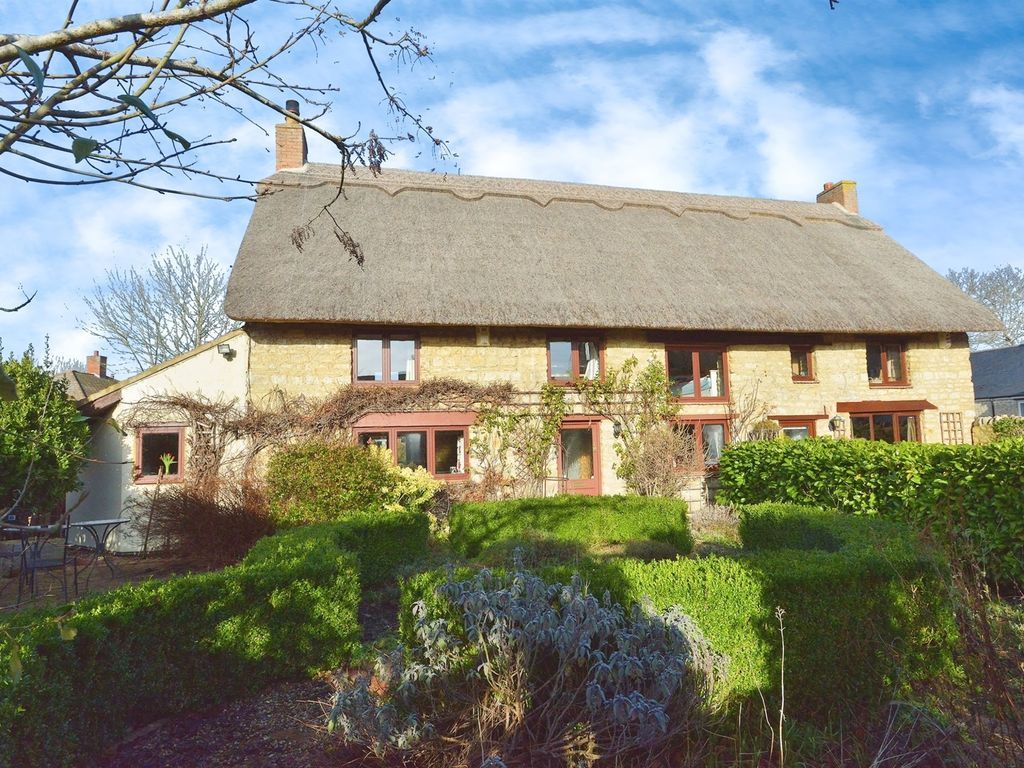
Central Milton Keynes was not quite where we expected to find our forever house, but it is our perfect combination of being five minutes away from the shops, and yet centuries away once we’re home. It is the most convenient place I have ever lived, but I’m quite happy for people to keep believing “it’s not where I thought someone like you would live”, because there are more than enough people here already, because that should keep the traffic as free-flowing as all the roundabouts make it.
Anyway, back to thatching. There are two main types of thatch: straw, and water reed. Always buy water reed if you can, although a lot of the time you will not have a choice, as the listing will include the type of roof material. But first, to introduce the details, is a comparison for beginners:
The basics
| Criteria | Normal houses | Thatches |
| Purchase price |  Price reflects maintenance cost Price reflects maintenance cost |  Seems like an initial discount of >10%. We are able to live in our forever house on a tiny mortgage. You need to view this as an offset to the cost of buildings insurance, and budget accordingly. We could reduce our premiums by getting rid of the wood burner, but it’s too much of a life enhancer in Winter. Seems like an initial discount of >10%. We are able to live in our forever house on a tiny mortgage. You need to view this as an offset to the cost of buildings insurance, and budget accordingly. We could reduce our premiums by getting rid of the wood burner, but it’s too much of a life enhancer in Winter. |
| Insulation | Modern cavity walls should make this warmer in Winter. | Usually no cavity wall insulation, but stays much cooler in summer. Small windows limit heat loss. We spend 10% less than similar size households on heating (according to our energy supplier), and are not cold. |
| General maintenance | There is always snagging with new builds. | Can be more expensive if you want to be a real stickler, but many thatches are already internally renovated and lack more expensively maintained features. You also can predict with some accuracy when and what you will need to maintain – get a good survey and plan for the cost of repointing lime mortar. |
| Roof cost | £28,000 every 30 years…that’s if the magpies don’t strip it for nests! | Don’t forget, tiles can blow off too. It’s not cost free. |
| Historical appeal | No telling how the development will look in 20 years. One of the greatest Achilles heels of Milton Keynes. | Amazing being the custodian of a building’s history. Also a lot of paperwork to ensure any work complies with the listing (“listed building consent”), but it is free, and easy enough if you plan in enough time. |
| Atmosphere | Truman Show | When we first viewed the house, I could almost feel the centuries. I don’t believe in ghosts, really. Mostly… |
| Spiders | There are still spiders! Spiders are good. | Ok so there are heaps and heaps of spiders. There are also no flies, and fewer moths. And you can recreate Miss Havisham’s ballroom whenever you like. |
| Garden fauna | Average | The fact we have a pond means there is an antire ecosystem of forgs, birds, insects and unfortunately foxes. We see many nesting birds, who tend to help themselves to our roof. It feels like giving back. We have a bee colony in the chimney, which cause no particular issues, albeit it was slightly disconcerting initially. |
What it means
There is a huge variation between different thatched properties, as indeed there is between all houses. It’s not a monolithic category which is either good or bad. There are thatches I would view, and wouldn’t dream of buying. You don’t need to be an expert to identify these – if the roof looks in poor repair, if you get very vague answers about the last rethatch date, I would avoid it. You can of course rethatch it immediately and factor the cost into your offer, but it takes a little while to get to know the thatchers in the area. It’s an easy opportunity to get to know your neighbours, as there will usually be some other thatched houses in the area. Everyone shares details very gladly on which contractors are best, and it’s too small a market to rely on websites. For that reason, you should be planning to live there for about five years before needing any major work doing, although as long as the thatcher is part of the guild, they’re all perfectly competent and insured. We enjoyed the few months our thatcher was doing the roof, getting to know them all, and their dogs. It’s often a family business, with father and son teams.
The survey is less straightforward than a conventional house, but you should not need a specialist surveyor. Just get a full survey done, and go through the results with a pinch of salt occasionally. The surveyor will review based on modern building standards and materials. He will mark down certain aspects on that basis, but as long as there are no structural issues, I would not get too exercised about minor details. A lot of the time they would only be an issue on a new build. Survivorship bias is a big reason to have greater confidence in the survey – if your house has stood for 300 years, the only thing taking it away is fire or flood. Forget about the lack of foundations.
The Listing
This is definitely daunting, but needn’t be. The rules are straightforward, and most councils make the process of applying for LBC quite simple – the forms will be on the Planning Portal. It does not require a special consultant, or cost any money unless you are also applying for planning permission (e.g. for an extension). You do need to be aware of the weight of your legal obligations. Not obtaining listed building consent for any alteration to your house is a criminal offence. This includes internal alterations.
I applied for permission to replace the windows with identical copies, which was easy to do, and the council was quick, efficient and constructive in responding to my builder’s designs. I would recommend looking at the existing window structures when you view the property. If the windows already have double glazing, then you will usually be able to replace “like for like” on the basis that double glazing was a precedent – so it can be quite an advantage. Look up the details of your prospective purchase on Historic England. If the windows aren’t specially mentioned as a feature, there will usually be less onerous conditions. Ours said “assorted windows”, and although the planning officer did stipulate very thin double glazing, this was achievable with a specialist supplier.
In reality, a lot of the interpretation comes down to common sense, and your local planning officer is more interested in whether you are responsible owners and meeting your obligations as custodians of a heritage property. A lot of articles are written about liability for alterations by a previous owner. Unless absolutely egregious (e.g. sticking a conservatory on the front etc.), this is largely an academic consideration. Our house had internal renovation work done on it 40 years ago, just after it was listed, and the council set aside in writing any liability pertaining to this issue – a letter our neighbour fortunately kept and shared with us. It is always important to have good relations with neighbours, but especially so when you share these obligations.
Other legal considerations
Make sure your conveyancer covers church tithes, and that you get insurance for these. It is obviously going to be more common in an old house, irrespective of the listing. Various extensions and outbuildings like garages can make property boundaries a little odd, but again these should be easily managed by your conveyancer. Where properties have been subdivided (our house is a semi), you can end up in the fairly common situation of your neighbour needing access to your garden to maintain the hedge on your side, because it’s actually his hedge. These are all fairly normal parts of the many eccentricities of English property law.
Should I do it?
Well, it’s a life’s work, but life is boring after a while. It adds to the fun! If you are moving to somewhere new, it gives you a ready-made way of getting to know people, because they tend to know a lot about the history of the house themselves. The local Facebook page becomes a bit more interesting than parking complaints, as people will often have quite fascinating photos of your property over many decades. It makes you care more about the environment; you will suddenly have an opinion about Chinese lanterns, you will be assiduous about having your chimney swept. You will learn how circuit boards work, and why electrical maintenance is a safety issue. You will have an evacuation plan, you will teach your children about fire safety, you will test your smoke alarms, and you will own fire extinguishers. All homeowners should do this, but they don’t. We live more consciously subject to the risks of nature, and we enjoy it.
If we do ever move, we will look for another thatch. I couldn’t be without the sense of wildlife.
 The resting writer
Leave a comment