
Today would have been my father’s 85th birthday. Well, not actually today, because I never posted this, so it’s a month later. I’m now slightly drunk, so I’m writing those random thoughts down anyway.
My father was born in 1940. My stepfather was also born in 1940. He is still alive. He once berated my mother for suggesting my baby did not need a second chocolate mousse, on the basis that he had four children, and my mother has two. The slight snag there is that in fact he has two children, and two stepchildren, exactly as my mother does. He continues to grace the earth with his presence, whilst my father was probably fortunate in dying when he was 77. My father had four daughters, and four grandchildren, the first and last of whom share a birthday.
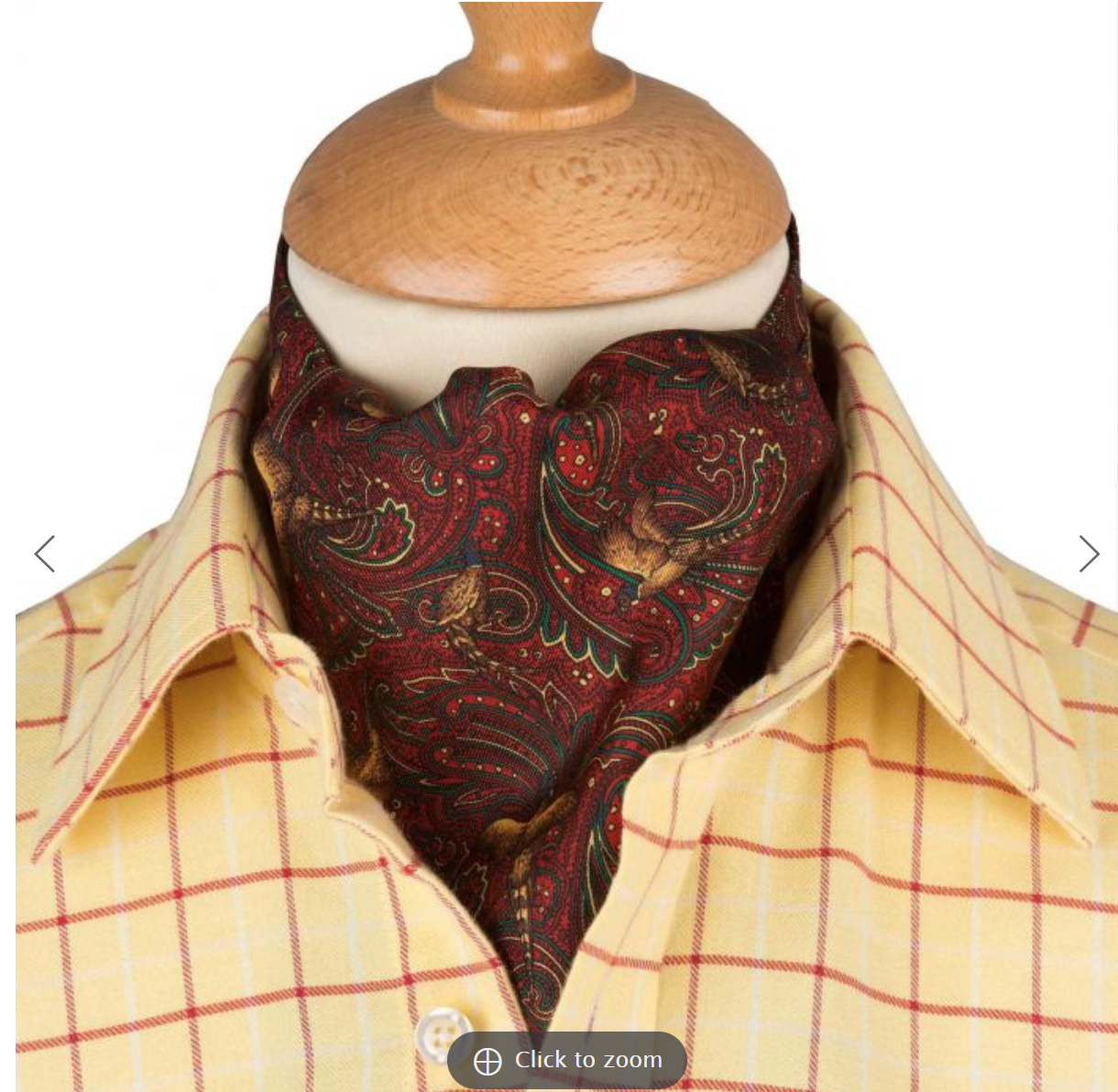
My father would never have tried to turn a bit of feedback about dessert into a competition, mainly because it is completely uninteresting and not his domain. His greatest asset was his appetite for novelty and the unconventional. His flaw was dismissing anyone he viewed as conventional, despite the fact that it is conventional outward appearances that can harbour the richest seams of creativity, particularly in an age where wearing a cravat is practically the mark of a revolutionary. Thomas Mann was probably one of the most fastidious people one could meet, and yet he is easily the greatest German writer of the 20th century, perhaps with the exception of Franz Kafka, who was an insurance salesman. They would both have needed a rigidity of process and self-discipline in their routines to create such perfection in writing.
My father’s other flaw, which he probably shares with the majority of his gender and generation, is to completely ignore the elements of life that someone else needs to do in order to get to the really interesting parts – like keep a child alive for long enough for them to be able to be interesting. If he had been our primary carer, I’m fairly sure I would not be alive to write this. He persuaded my mother to take us to Afghanistan wiith him in 1978, when we were 6 months old. He thought it was cool and hippy, having his family fit around his goals in an interesting way. He wanted to study the Afghan tribes of the plains, so infants were no obstacle at all – in fact, judging by the stories he told, it was helpful to his research. The bit he doesn’t mention is how we got serious infections all the time, and my mother was left alone in Kabul looking after us, jealously berated by Afghan mothers whose own malnorished children had died of the same infections. That is not a trivial detail of life, but all he talked about were the fun stories of gunpoint exchanges of cigarettes and riding bareback across the plains with his curly long beard.
I suppose being born in 1940 is a strange life, full of the greatest hardship and the greatest gains. The end of a war is a freeing moment of nadir, of scorched earth opportunity, in which I maybe romantically imagine people’s minds are focussed on practical, immediate concerns and opportunities are grasped with alacrity. It destroys so very much, and I often feel stupidly sad for Germany, which is vaguely my country. Someone on twitter was talking about Yiddish words, someone else replied with a Yiddish phrase, and the etymology was so close that it was quite easy for a German speaker to work out the meaning. The historical roots of the closeness between Yiddish and German are a heart-breaking reminder of what Germany has lost in its genocidal (the real one, not the twitter one) mania, and a stain that all Germans carry. I atone for a sin that was not mine, but I atone anyway.
When he died, we found this Rilke poem he had copied out into the front page of his notebook:
My father’s life was lived in a time of infinite promise, and infinite opportunity. Maybe that also made it hard to feel happy and contented with simpler, everyday pleasures. That is something he and my stepfather share. They were both successful, but that success waned in their older years, I think long before they retired. Ambitious, competitive men whose whole frame of reference was remade as they were growing up. My stepfather talks endlessly about his intelligence, but it’s clear that he did not get as far as he felt he should. My father on the other hand freely admitted he was good at the things he took an interest in, with no need for the rest. This was an age where you could do four years as a law degree, and then decide that in fact, you would bin the law career and become an Anthropologist instead, because it was cool. There is no student these days, unless from family money, who can decide at a whim to jump into a subject with no real job prospects. He decided Japan was cool and he was going to go and discover something interesting about Japan. When the world was giving him all these opportunities, constantly evolving and expanding all around him as a young man in the 1960s and 70s, it must have made the subsequent decades much harder to come to terms with. He was ageing into a time that no longer valued any peripatetic creative endeavours. You can’t really make a living from generic writing jobs any more, and there aren’t enough hours in the day to organise a portflio career. I remember him railing against Reagan, although he was rather quieter on the topic of Thatcher – perhaps because my mother wouldn’t stop complaining about her. The cuts to higher education funding and the relentless focus on STEM subjects affected their work from the late 80s onwards. Ironically, my mother was by far the more opportunistic and pragmatic about repurposing her skills as an anthropologist into corporate culture surveys. That paid for quite a lot of our teenage years. My father on the other hand was still cloistered in his study, full of books closing in around him, writing endless articles about transgression and performance and some random obsession with Georges Bataille.
What unites these two people born in 1940, one of whom was a selfish genius of sorts, and the other of whom is a very dull programmer who supposedly set up a novel algorithm at Oxford (of which great achievement I can find no trace)? What I think unites them is that as they age and die, they usher in another cycle of destruction and renaissance. I don’t know if it’s because such huge destruction needs living witnesses to avoid being repeated, or because they unwittingly set the seed for the next global conflict with their embrace of the entire world. It often feels as if collectively we have made the mistake of thinking that because of what the west has achieved since 1940, those background parts of our lives that make everything possible will just carry on existing even if we dismantle the foundations. Just as they seemed to ignore the boring bits because someone else was doing all that, we believe the process of endless change will never topple the scaffolding of our societies. As if we can change the rules of reality, but get back to it any time we choose.
I have probably already written about the poem we found written out in the front cover of another book after he died. Since we didn’t really know what he would have wanted, we buried him at sea
Du siehst, ich will viel.
Vielleicht will ich Alles:
das Dunkel jedes unendlichen Falles
und jedes Steigens lichtzitterndes Spiel.Es leben so viele und wollen nichts,
und sind durch ihres leichten Gerichts
glatte Gefühle gefürstet.Aber du freust dich jedes Gesichts,
das dient und dürstet.Du freust dich Aller, die dich gebrauchen
wie ein Gerät.Noch bist du nicht kalt, und es ist nicht zu spät,
in deine werdenden Tiefen zu tauchen,
wo sich das Leben ruhig verrät.Translation – I can hardly bear to read poetry translations to or from any language, but it’s a workmanlike approximation I suppose:
You can see that I want a great deal.
Perhaps I want everything:
The darkness of that neverending fall
And that rising’s light-coruscating play.
So many live and want nothing,
And by their easy judgement’s
Placid feelinhttps://lyricstranslate.com/en/du-siehst-ich-will-viel-you-can-see-i-want-great-deal.html
 The resting writer
Leave a comment