
Few things could surely be less important than breaking a teapot, in the wider scheme of things. I keep impressing upon my children that the path to happiness does not lie in more possessions. I try not to get attached. But where teapots are concerned, it is oddly sad when they break. We got our now-broken teapot from my brother in law, who came over with it as a housewarming present the first time he met his first nephew, over 12 year ago now.. I suppose that is why it means a great deal to us, because it is a daily physical reminder of other times and small babies. I don’t know if they were better times, but the past is shrouded in vagueness that blurs everything into soft feelings of love for a tiny bundle, and none of the contemporaneous trivia that fill our brains with stress.
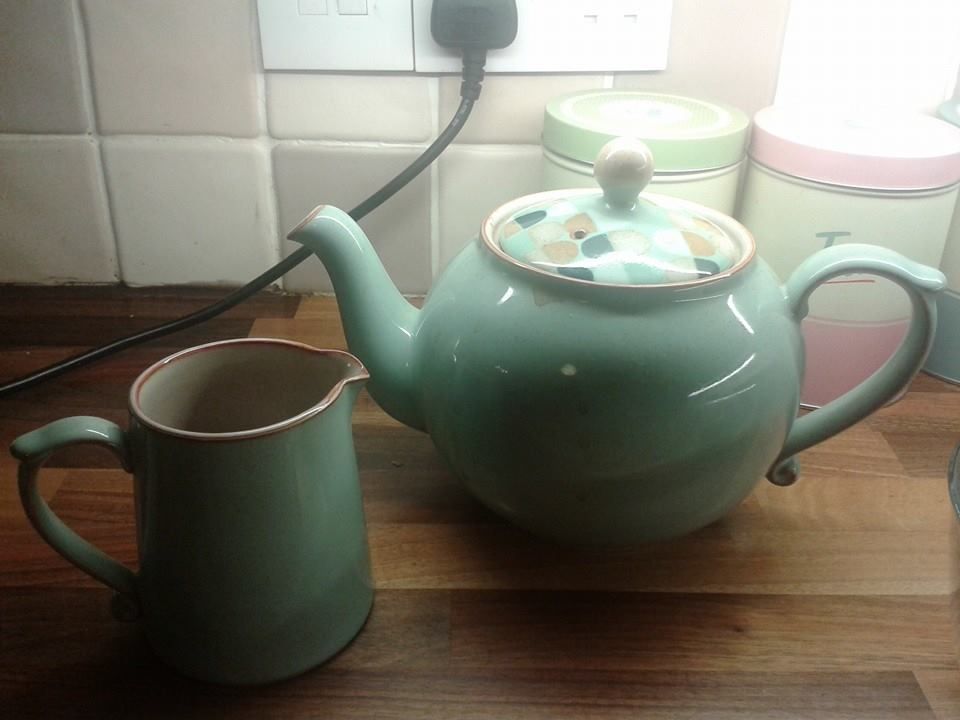
I hated Proust, but I suppose he has a point about the connection of sensory input to memory. It may not be a taste, but making tea is a whole daily routine. The weight and the shape of your teapot, the angle at which you pour it, the little particularities of how the lid fits. They all have little particularities, however mass produced they are. Ours was made by Denby, so we can’t get another one. There are no such models available on ebay, only pointlessly tiny ones. I should feel additionally sad about the implied decline of British businesses. My feelings changed somewhat when I looked at what they were charging for a mug – it’s just a hunch, but I think trying to sell a plain mug for £25 seems like a major product-market fit issue. I too like an interesting glaze and a carefully made thin lip, but I have a household budget which expects to pay about £10 for a mug. I’ll accept a thicker lip for slightly less money, and forego quibbling about the glaze.
When I was at university, I had a horrible, overly-large yellow teapot. I am not that disappointed at having no idea what happened to it. The clay was too thick, and the spout always seemed too enthusiastic, splashing tea everywhere; I vaguely remember how little I cared about spills and stains. I still don’t, I just pretend harder. That teapot should mean a lot to me, because it was a daily routine in a defining part of my life, but I don’t think I actually used it that often. I was far too disorganised to make pots of tea, and I think it had a two-litre capacity, so it was a bit pointless for one chaotic student. I used to have many friends, and I would make them tea if they came to my room, but the larger crowds involved more of a fags and booze vibe, with random drunk philophical questions about the value of human life and the life of a coral reef.
We could use my paternal grandmother’s old teapot for the time being. Richard thinks it is quite beautiful, but as I barely knew my grandmother, it means very little to me. My maternal grandmother’s teapot is a much greater source of regret. It was a battered, small upright tin teapot, which I think had a wooden handle. She always made cheap Assam leaf tea in it, and somehow I could never recreate the taste anywhere else. As a child I was fascinated by the whole ritual, as we didn’t drink tea in Australia. The idea of warming oneself with a drink was already quite a novelty, and it was always offered with a bourbon. When she died, many years after my grandfather, it was what I wanted to keep to remember them by, as the house and all its contents were sold. I never saw it again, and I convince myself that if only I could, she would somehow still be alive, because I could recreate that exact cup of tea and feel connected.
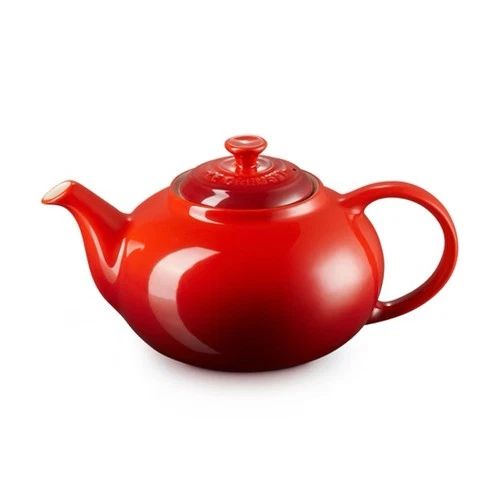
So yes, broken teapots are ruptured connections to the past which we mourn. It will take many years for the new one to acquire meaning. I’m sure it will, but for now I do not look forward to receiving this foreign item from an Ebay sale. Supposedly it’s Le Creuset, and red. Perhaps it will bring me good fortune.


hmm yes this all makes me rather sad
LikeLike